
Happy Labor Day! Growing up, Labor Day was always the sign of the end of summer. We would end the busyness of our county fair on Labor Day, and we would jump right into school starting on Wednesday. As I grew up, Labor Day turned into a wonderful three-day weekend to enjoy a break before ramping up for fall busywork. Over the past few years, I have started thinking more about what Labor Day actually represents, which turned into questioning my purpose or my “why” I work. So, I will ask you the question of the day…. What are you working for?
Let’s look at the history of Labor Day.
The first Labor Day holiday was acknowledged on Tuesday, September 5, 1882, in New York City, in accordance with the plans of the Central Labor Union. The holiday was celebrated with a march of thousands of workers who took unpaid time off to march the streets of New York City. The Central Labor Union held its second Labor Day holiday just a year later, on September 5, 1883.

From the Library of Congress
Marches started to expand into large cities across the country as the push to improve working conditions for industrial laborers grew. Unions and human rights supporters pushed for improved health and safety conditions, elimination of child labor, and for workers to receive fair pay for a day’s work.
By 1894, 23 states had approved the holiday, and on June 28, 1894, President Grover Cleveland signed a law declaring the first Monday in September of each year a national holiday.
After the day became a national holiday, the marches took on a festive tone and became the Labor Day Parade tradition many communities still participate in today. These workplace improvements paved the way for the U.S. to strengthen its industrial workforce which became the core of the middle-class movement in the United States.
For many people throughout history, their labor was backbreaking and exhausting. Adding insult to injury, they were paid a mere pittance for their efforts. These historical workplaces were a far cry from today’s workplaces with required breaks, free coffee, and ergonomic office chairs.
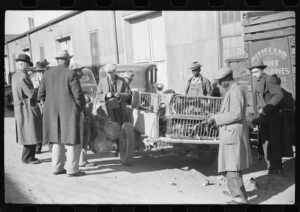
From the Library of Congress
Why did people put up with these difficult working conditions?
For many, it was desperation and for others, it was just what you did in society in those times. People didn’t have savings or the social safety nets to fall back on. They needed to work this week, so they could receive a paycheck to afford to live next week.
How does this history relate to modern workplaces?
With the way the modern workforce is set up, workers have significantly more rights, freedoms, and power in the workplace than in previous generations. Today, workers are able to compare jobs and choose based on published job duties, benefits offered, and their own personal preferences. If one job doesn’t work out for someone, there are hundreds of options available at any given time.
So, what are you working for?
If you ask people, the most common answer will probably be money. The second most common answer will probably be health insurance or other benefits. But what happens if you dig deeper than these two answers? What motivates you to work—specifically at your current job?
There are other ways you work besides just at your job. Volunteer work, community interactions, helping friends and family out. What motivates you to work for those things when there is no monetary compensation or reward?

Any job can provide you a paycheck. Many jobs can provide you with health insurance and other benefits. By identifying a deeper internal motivation, you can use this motivation to help you power through those days when the paycheck is just not enough to put up with the day-to-day frustrations of your current job.
As I was thinking about this post, I spent some time chatting with some of my friends about what motivates them to work and the answers I heard were surprising.
- “To make the world a better place. My efforts will improve someone’s day or make things easier for someone and that makes it worth it to me.”
- “So I can provide for my family and ensure they have everything they need.”
- “Because I would be bored not working or having something to do on a daily basis. I even get bored when I take more than a couple of days off.”
- “To help people grow. I like mentoring and building into my younger co-workers to teach them about navigating life at work and outside of work. It is fun to see them grow in confidence and go out to conquer the world!”
- “I work so I can travel. My job has a flexible work schedule, so I am able to travel extensively. While l dislike many aspects of my job, I value traveling and stay working here just for the travel benefits.”
- “I learn new skills. My job is highly technical and changing. I learn new web and problem-solving skills weekly that I can use to better myself and in my own side business.”
Based on these answers and many other conversations I have been involved in, it seems many people are finding motivations to work that are unrelated to a monetary reason like a paycheck or benefits. I see most of these motivations fall in one of the following categories:
Stimulation: Learning, growth, or advancement of skills.
Accountability: Having a purpose or somewhere to be to ensure a productive and active lifestyle.
A tool for passion: Provides money or other benefits to facilitate the pursuit of a passion outside of work.
Which of these resonates with you? If someone were to ask you “What are you working for?” How would you answer that question in a personal way?

How does knowing your “why” help?
By knowing your personal “why”, you can use that to help motivate you on those days you just don’t feel motivated. When a customer chews you out again, you can remind yourself that your “why” is the valuable mentoring relationship with your co-workers, and you won’t let cranky customers get you down.
Knowing your “why” can also help you with changing jobs. If you are highly motivated by developing and mentoring co-workers, then moving to a remote position will probably be difficult for you as the co-worker relationship is more difficult to develop remotely. You would want to look for a position that has close contact with a team.

So, this post turned into a whole lot of me talking about work. I know… Labor Day is a day off! That means we are not supposed to talk about work!
How about this idea? Take today and enjoy your day off, not thinking about work. But next week, do two things for me:
- Write down your personal why. What are you working for? It may be a sentence; it may turn into a whole story. But put it on paper and keep revisiting it in the future.
- Notice parts of your job that you enjoy, and parts that you dread. How do those align with your “why” that you identified earlier? Now, how can you do more things you enjoy and less of the parts you dread in your job?
Hopefully, some of these tips will help you with having more satisfaction at your job. Yes, work can still suck, and that is ok! However, having a deeper meaning and understanding your “why” can give you deep satisfaction in the job you are doing day in and day out.
I would love to hear your “why” statements. Please share them in the comments below or over on our Instagram!
Happy Labor Day Friends! I hope you all enjoy the last rush of summer!

Disclaimer
I focused this post on helping people understand what motivates them to work in today’s world. Historically, there have been some horrific working conditions, and they continue in many places around the world today. There are also significant problems in the U.S. modern workplaces that need to be addressed. Please keep comments polite, non-political, and fact-based. We are interested in hearing about your personal experiences working in the modern-day workplace.


Have a blessed Labor Day. These are great points to think about. I agree it is important to know your why.
Thanks! Enjoy your Labor Day too!
Love this! I work because it is my passion. I work for a non profit that helps to better our cities by putting on community volunteer days.
That is a great “why” and can get you through some hard days! Thanks for doing good work!
My grandfather asked me the same question yesterday. What am I working for and what does success mean? I honestly had no answer but your article was truly enlightening thank you for sharing
I am so glad you were able to have that conversation with your grandfather! Thanks for the kind comment!
Interesting knowing the history of the holiday. I do like the point on knowing your why for work. It definitely keeps one going and having their eye on the main thing.
I believe working with passion doesn’t make you think for once that you want to take the day off. You become a workaholic with full of energy. Btw I never knew the history of labor day, thank-you for enriching my knowledge.
Great challenge to think about!! I love my teaching job because of the time it gives me to travel and also I love building relationships with my students and having them come back for hugs and chats years later. I also am building my blog and youtube channel to hopefully one day have a way to travel full time
That is great insight for you! Teachers are so important in the development of our future generations! Thank you for what you do and I am glad you get to share your travels with them!
This is great! I’ve been talking a lot about the “why” with my daughter is is just about to declare her major in college. She’s looking, not surprisingly, to decide on a major and future career that will make her enjoy her job, fulfill her dreams but also keep her financially secure. Not an easy task but certainly doable.
She is in a big and scary time! I am so excited you are talking to her about this topic early! It can help her get through some tough classes that seem pointless if she is able to fall back on her bigger “why”. Thanks for sharing!
Great post very informative! Good job!