
Healthy eating is a popular topic online and on social media today. Everyone has their own unique opinions about what you should eat more of, less of, or exclude completely. It is hard to know what to do and who to listen to with the conflicting information coming from every direction. One consistent message I hear from almost everyone is that you should incorporate more veggies and fruit into your diet. Here are some ways you can use your garden to improve your healthy eating plan with more fruits and veggies!
Starting a garden for the first time can be exciting and scary! Take your time learning about gardening in your area and start slow. A few containers on your porch or balcony can still produce an impressive amount of food for you!
Before you get started
Take some time to identify your favorite fruits and veggies that you love to eat. Do some research into those fruits and veggies to learn how they grow and if they will grow well in your geographic area.
Some plants, like apple trees and berry bushes, take many years to mature and produce a harvest. Many others will produce the year you plant them but have to be replanted each year thereafter. Figure out what will work for you and your gardening needs!
Focus on growing nutritionally dense foods
All fruits and veggies have nutritional benefits, but some have more than others. To get the most nutrition from our gardens, we want to focus on growing foods full of nutrients. This is actually a pretty easy thing to do. Most veggies and fruit that can be grown at home are nutritionally dense and are a great addition to any healthy eating plan.
Consider crunchy iceberg lettuce. It was the staple of all salad bars when we were kids, but it has more water than nutrients. A 1 cup serving of iceberg lettuce has just 1 calorie but does not contain any measurable nutrients like calcium, vitamin C, magnesium, or fiber.
Spinach is the opposite of iceberg lettuce. A serving of spinach is rich in nutrients. 1 cup of raw spinach contains 60% of your daily vitamin A, 15% of your daily vitamin C, 4% of your daily iron, and 39% of your daily magnesium. Pretty powerful little leaves!
Devoting a section of your garden to grow spinach would provide more nutritional bang for your buck than devoting a section of your garden to grow iceberg lettuce. If you love iceberg lettuce, then go ahead and grow some, but maybe grow a few spinach leaves to add to your salad too!
Nutritionally dense foods like kale, spinach, green beans, tomatoes, zucchini, brussels sprouts, and strawberries are all very easy to grow in much of the US, and many can even be grown in containers.
Prioritize foods you love and will use
When plants mature and the food is ready to be harvested, you will be eating these foods a lot! So, you better pick things you like! This is the reason some people sneak zucchinis onto their neighbor’s porches in the middle of the night during zucchini season. They just can’t stand to look at another zucchini so they make it someone else’s problem!
Especially when starting out with your first garden, you will want to ensure that you love all of the foods you grow so nothing goes to waste. I started out growing tomatoes and lettuce. I love them both and knew I could incorporate them into many meals to use up the copious amounts of tomatoes that are ripe in August and September. If you guessed that I ate a lot of salads that year, we have a winner!
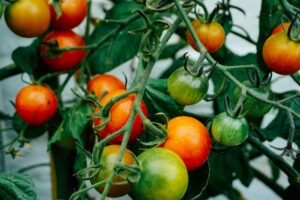
Look for new recipes incorporating the foods you are growing in different ways. Eating tomatoes 5 nights in a row is less repetitive and boring when you change up the meal type like this:
- Cooked down in a hearty tomato sauce
- Cut up in a veggie-heavy pasta or lentil salad
- Stuffed with rice and seasoning into a stuffed baked tomato
- Made into fresh pico de gallo for taco night
- Cooked with some cream for a fresh tomato soup
5 nights of tomato-heavy meals, but they all have different cooking methods, flavor profiles, and tastes so you don’t get sick of the tomatoes. Make a meal plan to use up what is ripe as the summer progresses. Who knows what kind of new recipes and favorites you will find to add to your healthy eating plan!
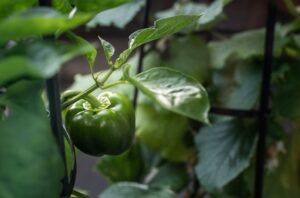
If there are foods you dislike, don’t even bother trying to grow them. In my case, that would be bell peppers. I strongly dislike them and would have zero interest in using them in anything if I did grow them. But they are one of the most popular things to grow, so whenever I am shopping for seeds or starts, I always am dodging peppers!
Grow a diverse variety
Growing only one thing can get repetitive and boring. Mix it up and incorporate new veggie and fruit ideas into your garden. Pair similar items together that you can use up easily:
- Tomatoes and jalapenos become salsa
- Basil and garlic become pesto
Once you have the foundational veggies that you grow year after year identified, then add something new each year. I grew a tomatillo plant for the first time last year and made some fabulous green enchilada sauce by pairing it with a poblano pepper plant. It made a few delicious dinners in the summer and I saved the rest in the freezer for winter!
Expanding your fruit and veggie choices can expand the horizons of your cooking skills too. Growing something unique like Bok Choy, can expand your repertoire of Asian recipes from various countries, and give you something new to incorporate in existing recipes in place of other greens like cabbage or kale.
Try before you grow!
Make sure you like the foods you grow and try them at least once before planting them in the garden! You don’t want to waste the water, growing space, and energy growing something that will go to waste.
If you are unsure of how to cook something new that you grew, there is some help for that! Watch a youtube video on how to cook it. Many will show you how to clean and cut veggies and fruit too. Or ask a friend. Someone in your circle must have prepared this before. Send out an ask on your social media for tips and tricks from people who have done it before.
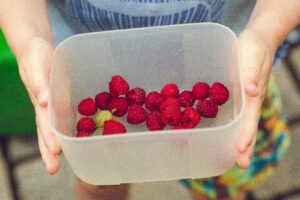
If you do end up growing something you dislike or have more harvest than you can handle, make a plan for how you can get rid of the harvest without it going to waste.
- Try eating it a different way. If you didn’t like it raw, try it cooked. If you didn’t like it baked, try it stir-fried or grilled. See about substituting it in a recipe you already love and getting used to it that way. But it is also ok to just dislike something and not force yourself to eat what you hate.
- Offer it to friends, neighbors, coworkers, or random people on the street. Yes, we all have that coworker who leaves tomatoes and zucchini on the lunchroom table. That could be you!
- Contact your local food bank. Many have donation options for home gardeners that allow you to drop off your excess produce and they will provide it to people using food assistance.
Consider preserving part of your harvest
You probably have memories of helping your mom or grandma can fruits or veggies as a kid. For me it was fruit. So many peaches, pears, and cherries to peel, pit, and stuff in jars! Preserving doesn’t have to be as complex as canning, cooking, freezing, or dehydrating are all methods of preserving.
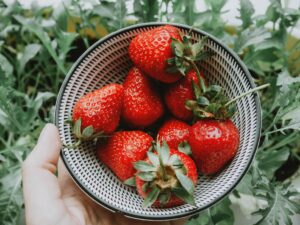
Not everything can be preserved. Lettuce and snap peas are a couple of examples that come to mind.
I tend to use my freezer frequently for storing excess produce. Much of it can be cooked and frozen and will work well added to future meals. For tons of ideas, google the vegetable and preserving, or check out a reputable gardening website like this for ideas. This is an easy way to extend your healthy eating plan past harvest and into fall and winter.
A garden can be a lot of work, but the benefits to your health can be life-changing. Gardens incorporate healthy food with increased physical activity to improve your overall health. What a great hobby to add to your life!
If you are looking at starting a garden for the first time, check out our other garden posts about how to save money on your garden and how your garden can improve your wellness.
If you are a gardener, I would love for you to share your favorite ways to incorporate your harvest into your healthy eating plan! What are your favorite ways to cook the veggies and fruit you harvest? Share your tips over on our Instagram page or in the comments below!
Pin Me!

Leave a Reply