
Saving money can come from all areas of life. Today we are doing double duty with the kickoff to our Garden Week and looking at how you can save money by having a garden and how you can create your garden without breaking your budget.
Gardening can be a great double-duty hobby. Not only does it have a ton of benefits to your personal health, diet, and wallet, it can be an enjoyable way to nurture plants and spend time outdoors too. But, as with many hobbies, it can also break your budget a bit, especially as you are starting out.
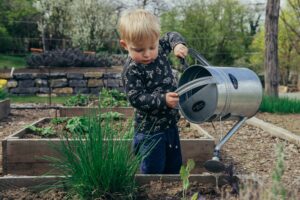
It doesn’t have to! The earliest gardens were just planted straight into the ground. No fancy raised beds or tools. They just mixed in some animal poop once or twice a year and were able to feed their families. Today, there are so many options available, many of these cost money and you can find an “expert” telling you that you need all of them or your garden will fail! Not true! Start out small and check out these tips on getting started with a garden without breaking your budget.
Saving money on a Garden
Start small
Yes, I have said it before, but here it is! If you have not grown a garden before, then start small so you don’t get overwhelmed and not like it. The progression of gardening looks like this:
- Herb garden in the windowsill
- Small containers outside
- Larger containers
- Raised bed gardening
- Expand your plantings to include perennials like fruit trees
- Wild and free gardening covering a large area
Start at a level you are comfortable with, and then grow as you learn and expand your horizons.
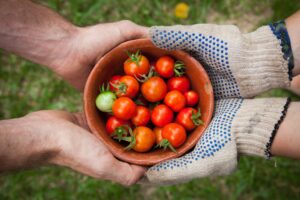
Don’t get oversold
Do your research before you start gardening and when you encounter a problem. Often people at hardware and gardening stores are quick to sell you the latest tool, fertilizer, or soil additive. Before you buy, do your research, ask for advice, and see if there are cheaper solutions.
Look for free resources and advice
Gardeners love to give advice! Connect with local gardeners, hang out at farmer’s markets, and connect with your local Master Gardeners program to find a ton of people who are willing to answer questions and offer advice (sometimes whether you want that advice or not!).
Stick to the basics
Gardening doesn’t have to be complicated. Start with a seed or plant, ensure it has adequate water and nutrients as it grows, and then harvest the produce as it reaches the end of its life. Plants don’t need a fancy sprinkler system to grow. There are a ton of specialty products that are marketed towards gardeners, that have varying levels of benefits. Don’t be swayed by fancy products, especially when you are starting out. Stick to the basics to get started and add in some of the cool tools once you have determined it is a lasting hobby for you!
Historical knowledge is often best
Gardening is one area where new, latest, and greatest, technology is not always the best. Our ancestors have been gardening for hundreds of years, and have passed down wisdom of how they learned to have thriving gardens. Don’t dismiss resources like The Farmers Almanac, natural fertilizers, non-chemical pest control methods, and old wives tales that sound weird, but seem to work!
I have twice repelled cats and voles living in my garden using a mixture of specific essential oils, castor oil, and dish soap. The garden store tried to sell me an expensive mechanical tool to do this, but after doing some research, I decided to try an alternative. I spent about $10 on a bottle of non-food grade peppermint essential oil, the rest of the ingredients were things I owned. It took about a week each time but was so effective and it didn’t cost me $150 to do it!
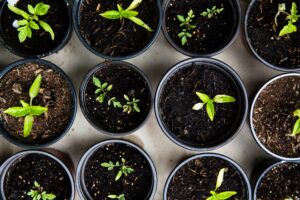
Buy used
Does it really matter if your shovel is new or used? Save money by looking at yard sales or estate sales for used garden tools. My favorite is shopping at estate sales. Often, I find high-quality tools for a bargain price. The best things I find at estate sales are partially used/open fertilizer or cleaning products, usually, priced for a buck or two so that it gets sold. These can be great finds to try out different products or supplement what you find for full price elsewhere!
Saving Money with a Garden
The best part of a garden is that it provides you with fresh, healthy veggies and fruit that have grown right outside your door. By focusing your gardening efforts on foods you enjoy, a garden can have a significantly positive impact on your budget. Here are some tips to help maximize the money-saving aspect of your garden.

Grow your favorite fruits and veggies.
Identify what fruits and veggies you consume the most and love and focus on growing them. Not every plant will grow everywhere. That is why you don’t see many lemon trees in Alaska! The US is broken up into climate zones, you can find yours here. Once you know your zone, you can find some plants that work well in your zone here. Look at different fruit and veggie plants and see if they thrive in your zones. Focus on finding versions of your favorite fruit and veggie choices that work for you.
Find plant types that fit your garden
You want to find varieties of the same plant type, that have different characteristics or traits. Many plants will have multiple varieties or types, so one type of Pea plant may be ideal for zones 1-3, but keep looking and you can find a Pea plant for zones 4-6 as well. Burpee Seed Company is a great resource to find different varieties with unique traits that fit your location.
Be aware of your garden size. Look for “bush” variety or “determinant” plant variety for smaller plants that work well in containers or smaller spaces. If you have times of extreme heat, look for “bolt-resistant” varieties of plants like lettuce to prevent them from going crazy in the heat.
Plant “high-value” fruits and veggies
Prioritize planting fruits and veggies which have a higher cost for you to buy. I love potatoes, but they are so cheap to buy at the grocery store, and they take up a lot of space in a garden, so I don’t grow any potato or sweet potato varieties. Same with cabbage. I focus on higher-value produce like tomatoes, lettuce, salad greens, strawberries, and peppers.
Think long term
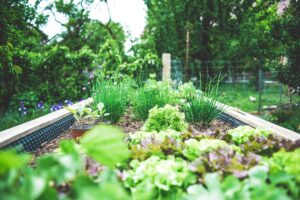
Gardening is both a short-term and long-term game. Short-term, you are looking at everything needed to get from planting to harvest. Long-term looks at soil health, growing the size of your garden and planting some perennial (multiyear) plants. My favorite perennial gardening plants include blueberry/raspberry plants, fruit trees, asparagus, or rhubarb. Once you have tried annual gardening for a year or two, consider adding in some perennial plants that you love. Blueberries are my favorite fruit (and really expensive!) and I am looking at how I can include them in my garden too.
Getting started
There are a ton of ways you can get started, but I would emphasize that you start small with a few containers, or maybe a raised bed. Make sure you enjoy gardening and can cover the responsibility without being overwhelmed before you spend a ton of time, money, and effort in creating an elaborate garden only to discover that you hate it!
So, start slowly buying a few things as you need them. Enjoy feeling the dirt under your fingers and becoming one with nature.
If you are a gardener, what is your top tip for someone starting out and saving money on a garden? I would love to hear your advice on Instagram or in the comments below!
Pin Me!


[…] in my life, but I definitely am craving some dirt under my fingernails as spring rolls around! Gardening has been highlighted in several studies as a hobby that provides exceptional wellness benefits. As […]